Accepted inventory for this route
Single-conductor and multiplex URD on full or partial reelsAluminum or copper underground distribution cableUnused project surplus with tags or continuous markings
Underground residential distribution cable on full or partial reels.
Electrical Wire Buyers reviews documented urd cable for potential reuse or recovery, including full reels, partial spools, and usable cuts. Any offer depends on construction, quantity, condition, location, and current requirements.
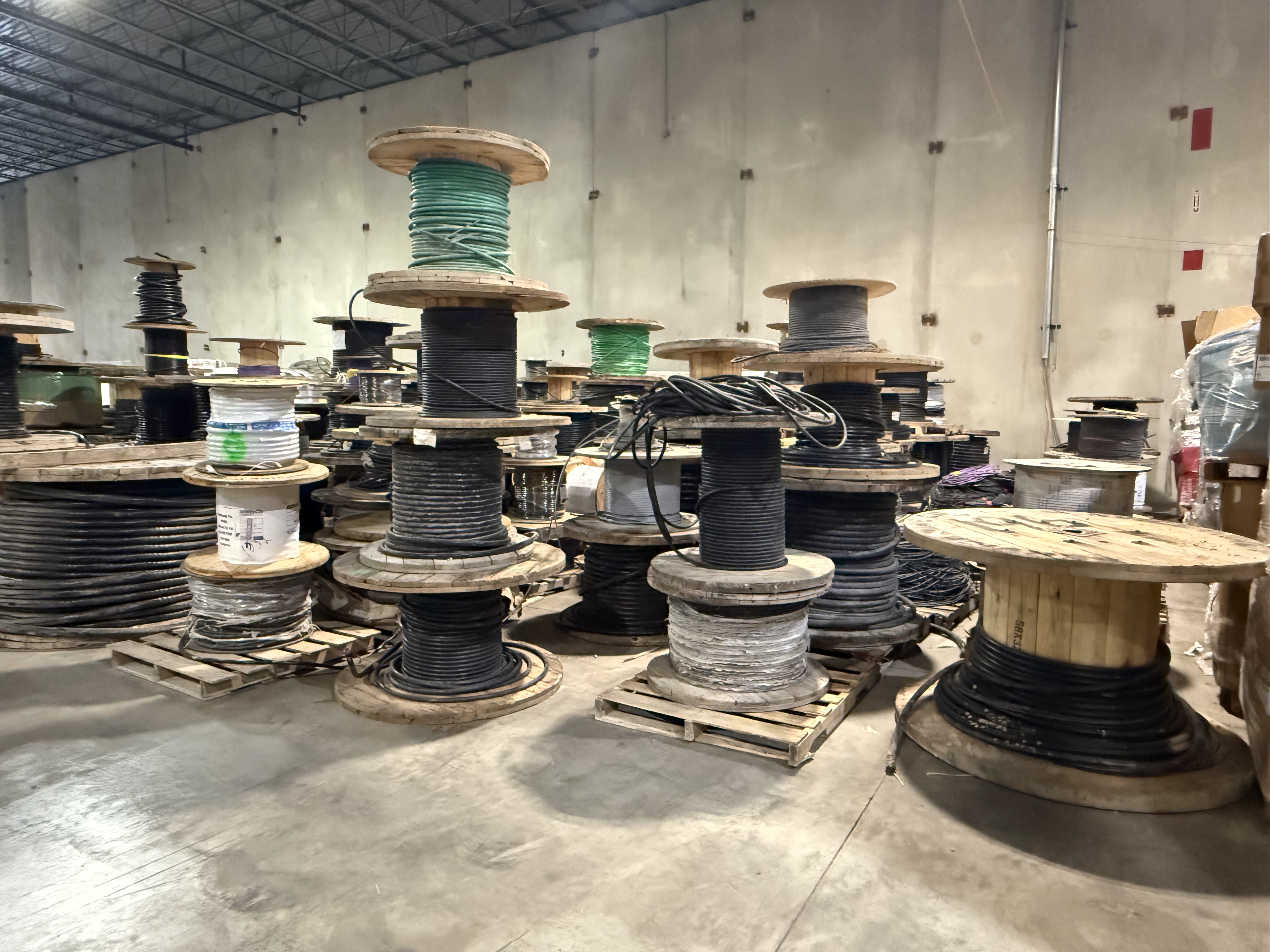
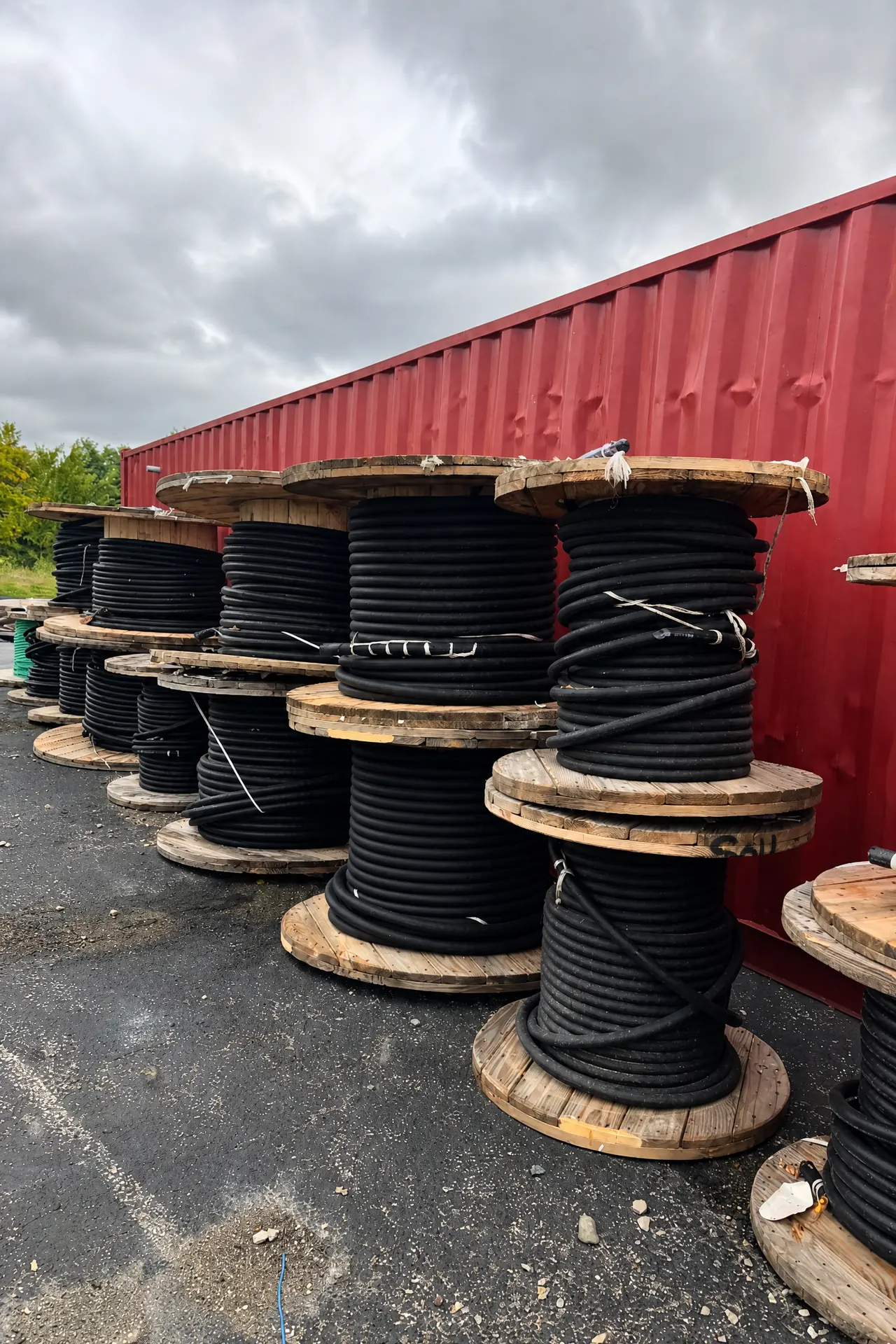
Material may come from canceled construction projects, completed jobs, demolition recovery, overstock orders, warehouse liquidations, and plant decommissions. Send the documented commercial lot for review.
Use the relevant city or state route to document the actual pickup location, access, and loading conditions:
URD cable may be a single conductor or multiplex assembly with aluminum or copper conductors. Do not rely on the black jacket alone; show the printed designation, conductor arrangement, neutral, size, voltage, and reel evidence.
Capture SER, SEU, USE-2, URD, or related jacket markings, conductor count, conductor metal, size, and voltage rating. End views are especially useful when the neutral construction or conductor arrangement affects identification.
List each reel separately when sizes or remaining footage differ. Provide reel diameter, flange-to-flange width, estimated or tag footage, and whether the reel can turn freely for inspection or loading.
URD reels can be heavy and may sit outdoors. Describe covering, ground contact, yard surface, trailer access, equipment capacity, reel weight, and whether the reel turns safely.
Use printed jacket markings, conductor count and arrangement, neutral construction, metal, size, voltage, reel tag, and end views. Jacket color alone is not reliable.
Black insulation does not prove URD construction. Single-conductor, duplex, triplex, and quadruplex assemblies can differ in phase conductors, neutral design, metal, size, voltage, and intended service, so the reel and end view must support the description.
Record single or multiplex construction, phase count, neutral type, conductor metal, conductor size, voltage, insulation, and complete printed designation.
List every reel by tag, original and estimated remaining footage, dimensions, gross weight, end condition, and matching SKU.
Show ground contact, covering, standing water, sunlight, reel hardware, jacket cuts, swelling, contamination, and sealed or open ends.
Report road, gate, yard, and trailer conditions; reel weights; loader, forklift, or crane ratings; axle access; and whether outdoor reels can be reached without crossing soft or restricted ground.
Use the printed product designation, conductor arrangement, neutral construction, metal, size, voltage, reel tag, and end view. Color alone is not evidence.
Yes, when storage and condition are fully shown. Include covering, ground contact, moisture, sunlight, jacket, ends, reel structure, footage, weight, access, and lifting resources.
Describe URD strictly from observable conductor construction, jacket legends, and end views rather than an assumed product class. Include whether reels are full or partial, any multiplexed phase/neutral arrangements, and clear notation of aluminum or copper conductors and outdoor storage exposure. Do not imply specialty utility authority; record only the documented physical features that define the lot.
Assessment focuses on documented conductor construction, confirmed conductor metal, continuous footage or clearly separated quantities, and reel integrity as shown in submitted images and notes. Condition evidence such as exposure, flanged fill, tag legibility, and protective coverings will influence how each reel is characterized against commercial conductor standards. Seller-supplied descriptions support but do not substitute for the photographic and dimensional evidence required for a material-specific review.
State reel diameters, flange widths and gross weights, and describe the yard surface and gate or trailer approach facts that affect safe reel handling. Confirm whether temporary coverings or blocking exist and identify the rated lifting equipment on-site so a handling assessment can be made. Any proposed method for moving or staging the reels should be tied to the documented reel dimensions and the recorded access conditions.
A URD cable end photo should show a square-cut conductor end with visible strand pattern, the conductor metal (aluminum or copper), strand count or strand size where legible, and the adjacent jacket or insulation so neutral construction and conductor count can be confirmed from the image.
Report outdoor storage by photographing reel hardware, cover condition, ground contact, tag legibility, exposed ends and any moisture or sunlight effects; note what temporary protection is present and how the reels are positioned for safe handling.