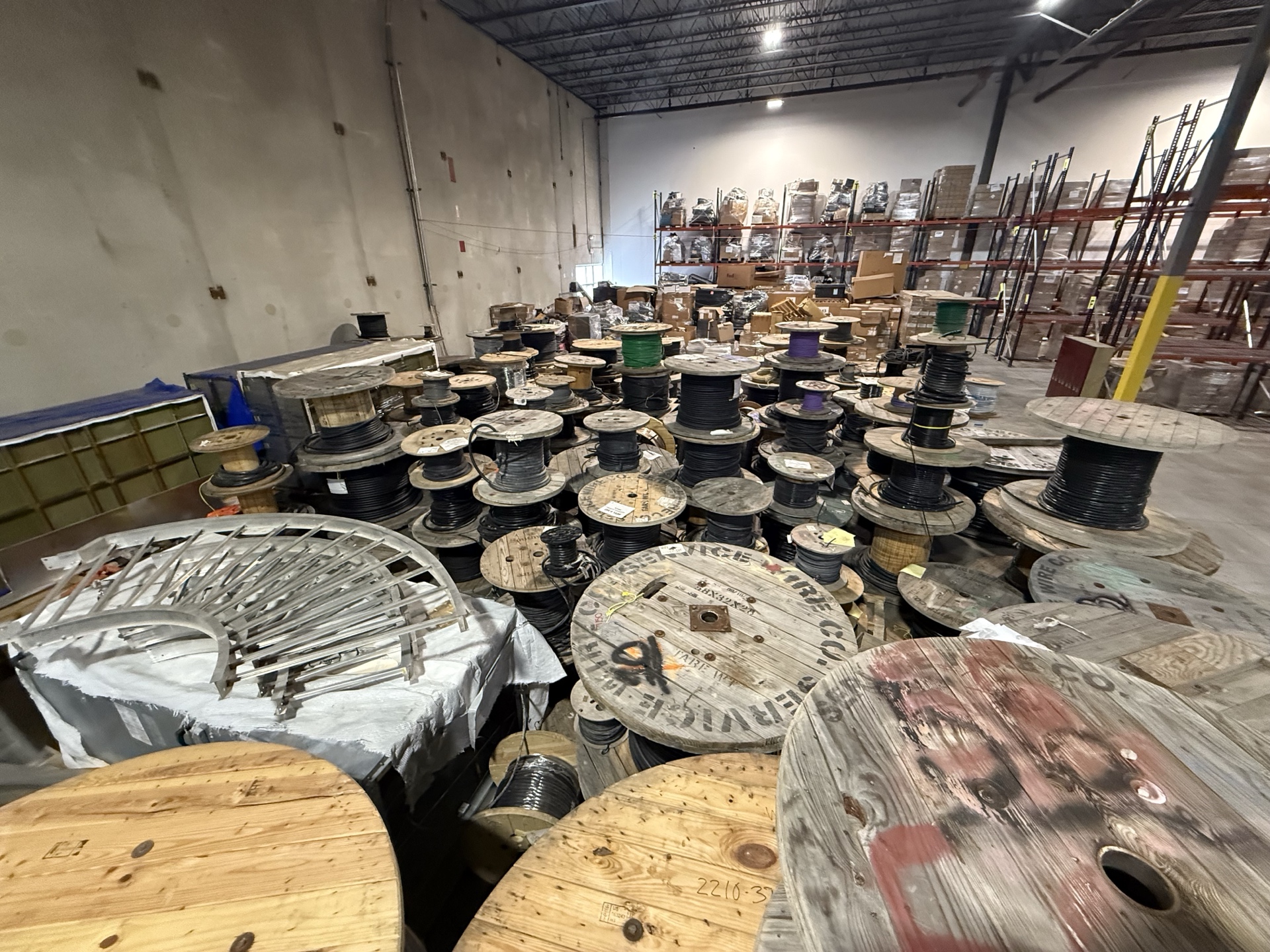
Accepted inventory for this route
Bare copper grounding conductor in coils or reelsInsulated copper building wire and feeder cableCopper MC, welding, portable, tray, service, and removed cable
Prepare insulated or bare copper wire in commercial quantities, including full reels, partial reels, coils, cartons, and reusable continuous lengths with supporting documentation.
Copper content alone does not define a wire lot. Insulation, gauge, strand construction, length, package, condition, and identification determine whether material may have a reuse path or only recovery value.
Separate the lot by visible label whenever practical: wire family, copper or aluminum, gauge or MCM size, conductor count, and new-versus-removed condition. Unknown material can still be reviewed when the jacket and cut ends are photographed clearly.
Group unlike wire into a simple inventory: type, size, conductor, package, and estimated quantity. Counts by reel, coil, carton, pallet, or loose bundle are more useful than one combined weight when the mix has different resale paths.
Secure coils and loose conductor so lengths and weights remain traceable. Note whether reels, pallets, or containers can be loaded mechanically.
No. Do not alter usable material solely for a quote. Send jacket, conductor, size, length, condition, and quantity evidence so the existing form can be evaluated first.
Copper wire can be bare, insulated, tinned, armored, flexible, or combined with other metals and attachments. Jacket, size, strand construction, continuous length, package, and condition remain important even when a cut end confirms copper.
Show a clean end view, strand pattern, plating or corrosion, and enough jacket legend to connect the conductor to its listed size and rating.
Separate bare grounding conductor, insulated building wire, feeder cable, armored cable, flexible cord, and mixed attached copper.
Count coils, reels, cartons, pallets, long cuts, and loose pieces separately, with length or weight evidence for each group.
Band coils without crushing insulation and secure loose conductor so the inventory remains traceable. Identify reel, pallet, box, or container weights and whether mechanical loading is available.
No. Insulation, markings, continuous length, and package can be useful evidence. Send the cable as it exists unless safe removal of an attachment is separately agreed.
Describe the visible surface, show a clean cross-section and jacket markings, and keep it separate from bare bright copper. Do not identify plating from color alone when it is uncertain.
Prepare insulated or bare copper wire in commercial quantities, including full reels, partial reels, coils, cartons, and reusable continuous lengths with supporting documentation.
Our buying desk reviews wire type, conductor metal, size, quantity, condition, ownership, release status, and location. Send clear photos and the available inventory details so the team can determine whether the material is a fit.